From Their Hands to Yours
Stories from the Market
From Sap to Syrup: A Cozy New England Tradition
“I happen to know everything there is to know about maple syrup. I love maple syrup on pancakes. I love it on spaghetti…” — Buddy the Elf
It’s at this most wonderful time of year when cold mornings linger a little longer; holiday to-do lists grow quickly; and the idea of a warm, comforting breakfast feels especially welcome. In the Valley, weekend breakfasts at local diners are a beloved New England tradition — but during the busy holiday season, lines are long and schedules are full. Sometimes the coziest choice is staying home and creating your own authentic New England breakfast.
That’s where local maple syrup comes in. The liquid gold to top your breakfast of pancakes, French toast or waffles.
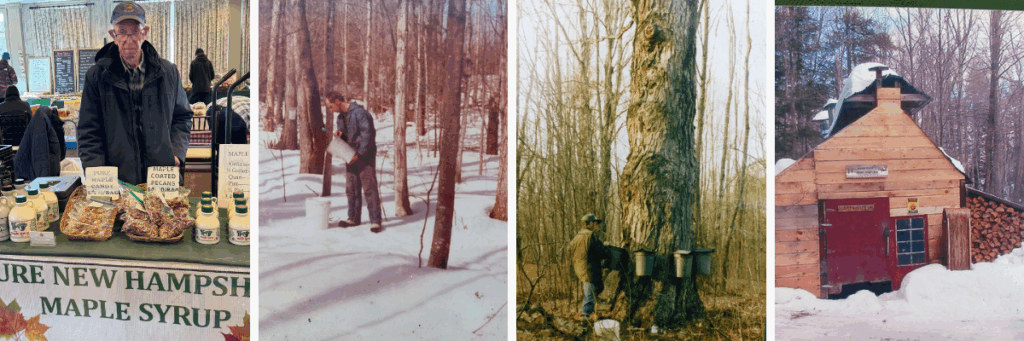
Nothing tastes more Yankee than sweet sap drawn from local sugar maples, and few people know that better than Steve Anderson of Anderson’s Mini Maples. Steve has been producing high-quality maple products the old-fashioned way in Deerfield, New Hampshire. Since 1972, Steve has been harvesting his own trees and boiling sap over a blazing pine wood fire.
A One-Man Operation, Five Decades in the Making
Steve’s path to sugaring began unexpectedly. Originally trained as a pharmacist, he was introduced to maple sugaring by a fellow producer and decided to give it a try. He started small — just six buckets — boiling sap on his kitchen stove. That first experiment ended quickly when maple steam stripped the wallpaper from the walls, prompting Steve to move the operation outdoors and eventually build his own evaporator and sugar shack.
Today, Anderson’s Mini Maples remains a true one-man operation. Steve taps and tends his trees himself, using a mix of tubing and about 200 five-gallon buckets, collecting sap in a 325-gallon tank mounted on his truck. He is careful to harvest responsibly, taking only about 10% of a tree’s sap each season to ensure the long-term health of the maples.
Maple sugaring is demanding work. It takes roughly 40 gallons of sap to produce just one gallon of syrup, and during peak season Steve may boil all night to keep up with the flow. Climate change has also shifted the rhythm of the season. What once began after town meeting in mid-March now often starts as early as the second week of February.
Despite the long hours, Steve says harvesting is his favorite part of the process. “Being outside, collecting sap — that’s the best part,” he shares. Boiling, he jokes, is mostly just watching water boil.
Maple Sugar Month in New England
As winter loosens its grip in March, New Englanders know the signs that sugaring season has arrived. Frosty nights and warmer sunny days allow sap to ebb and flow, producing the distinct grades of syrup we enjoy. Beyond its unmistakable flavor, maple syrup offers real nutritional value: it contains 24 antioxidants, fewer calories than most sweeteners, and important minerals like calcium, potassium, iron, zinc, and manganese. Late-season dark syrup, in particular, is rich in zinc and manganese and lower on the glycemic index.
Understanding the Grades
Steve offers several grades of organic, gluten-free maple syrup, each with its own personality:
Early Tap — Grade A Light Amber
The lightest grade, with a delicate, subtle maple flavor. Often called “Fancy,” this syrup is perfect for pancakes, waffles, French toast, and enhancing lighter dishes without overpowering them.
Mid-Season — Grade A Amber
A classic golden-amber color with a smooth, rich maple flavor. This versatile syrup is ideal for everyday use — from breakfast favorites to ice cream.
Late Season — Grade A Dark (formerly Grade B)
Despite its old name, there is nothing secondary about this syrup. Darker and bolder, it stands up beautifully to baking, blending, and cooking.
Late or Last Tap — Very Dark
A market favorite and revered by Yankees everywhere. This darkest syrup has the strongest, most intense maple flavor. Less sweet and deeply robust, it’s ideal for maple candy, baked goods, and even stirred into coffee, tea, or holiday drinks.
Beyond the Bottle
In addition to syrup, Steve produces several beloved maple treats, all available at his market table:
Maple Hard Candy
Handcrafted in small batches and sold in one-ounce portions, these candies are labor-intensive and produced in limited quantities. A perfect stocking stuffer or special treat for true maple lovers.
Maple-Coated Pecans
Roasted pecans drenched in hot maple syrup and stirred until perfectly coated. Sold in four-ounce bags, they’re a market favorite — great in salads, cookies, oatmeal, yogurt, or as an on-the-go snack.
Maple Sugar
A nostalgic New England classic. Boiled and slowly mixed to just the right consistency, Steve’s maple sugar brings smiles to anyone raised south of the Canadian border.
A Sweet Local Legacy
If you’ve visited the Market, you’ve likely seen Steve behind the table at Anderson’s Mini Maples, answering questions and sharing stories. The most common question? Whether he has sugar-free syrup. “Without the sugar,” Steve laughs, “it wouldn’t be maple syrup.”
After more than 50 years, Steve continues to tap many of the same trees he started with, plus newer ones that have matured over time. He still walks his lines, talks to the trees and does the work the traditional way — because for him, maple sugaring is the real thing.
Stop by Steve’s table, pour a little syrup over pancakes — or vanilla ice cream — and enjoy a tradition that’s been decades in the making.